Locally owned family business. Monday to Friday, 7am to 6pm Leave a Google reviewFacebook info@coastwidepestandtermite.com.auEmail us Call or text 0488 287 987

Termite education

Understanding termite types in Queensland

Not all termites are the same. Different species vary in nesting habits, foraging behaviour and the risk they pose to buildings. Correct identification helps guide an appropriate response.

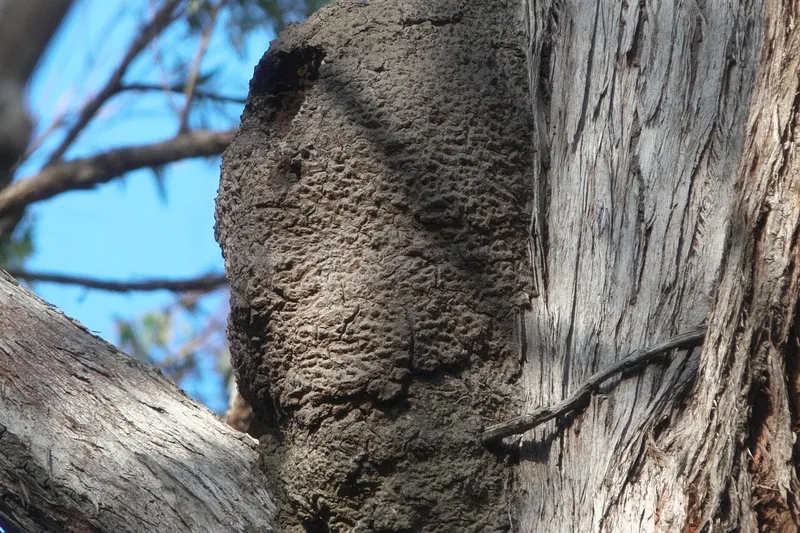
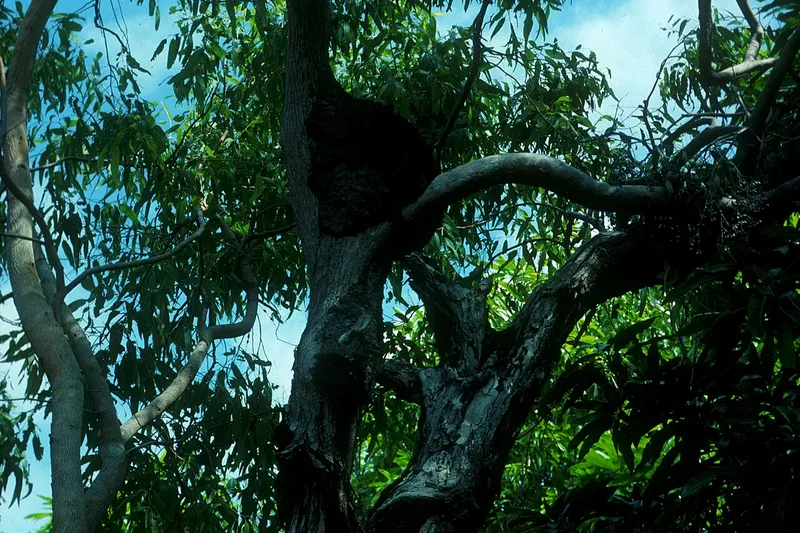
A termite nest built in a tree
Nasutitermes nest built in a tree, Cape York, Queensland. Photo: Forestry and Forest Products, CSIRO, CC BY 3.0.
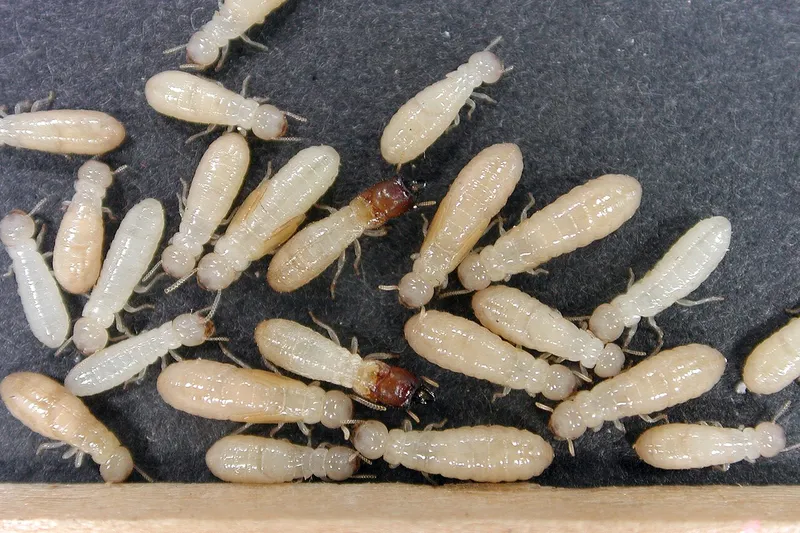
Coptotermes termites
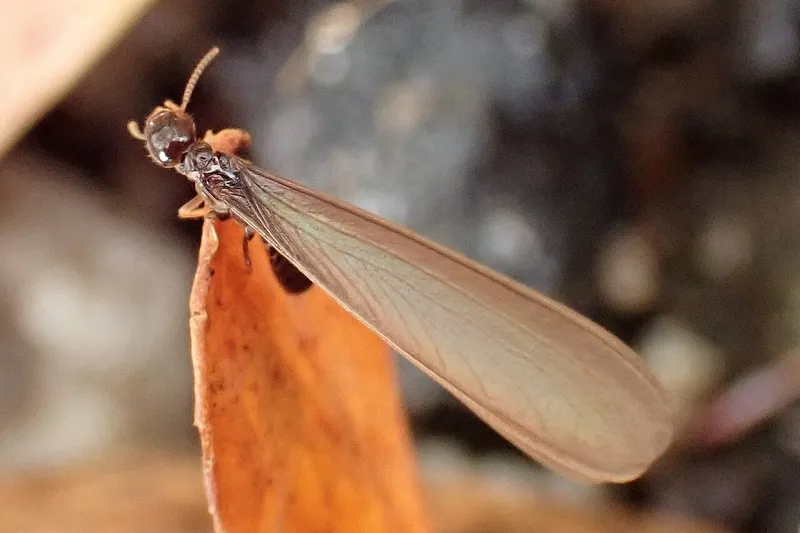
Coptotermes acinaciformis, winged reproductive (alate). Photo: Mike, CC BY 4.0.
Serious structural risk

Coptotermes

Major timber-destroying subterranean termites

Coptotermes species, including Coptotermes acinaciformis, are among Australia's most significant structural timber pests. Their colonies can be large, and termites may access houses through concealed ground-level pathways, timber and mud tubes. Activity can damage wall framing, roof timbers, floors and joinery.

Usually found: Soil and concealed ground-level pathways
Schedorhinotermes termites
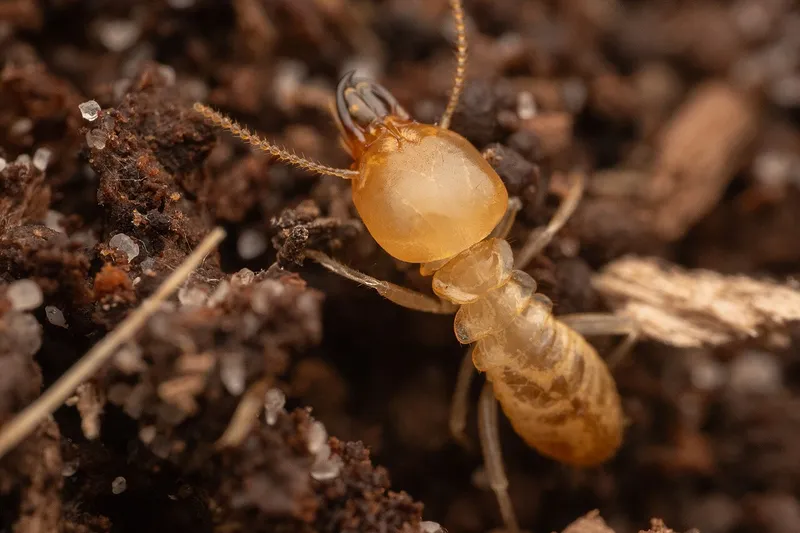
Schedorhinotermes intermedius soldier, New South Wales. Photo: iNaturalist contributor, CC0.
Can cause serious damage

Schedorhinotermes

Concealed subterranean activity

Schedorhinotermes species can cause serious timber damage. Colonies commonly operate in soil or concealed environments. Some produce soldiers of two sizes, which can help specialists identify them. Damage may be advanced before an occupant notices it.

Usually found: Soil or concealed environments

Nasutitermes termites
Nest of the tree termite Nasutitermes walkeri. Photo: Robert Webster, CC BY-SA 4.0.
Risk varies by species

Nasutitermes

Tree nests and other colony types

Some Nasutitermes species build conspicuous nests in trees, while others nest in less obvious places. Some may affect timber in buildings, but not every species is a significant structural threat. Identification should come before treatment.

Usually found: Trees and less obvious places

Risk varies by species

Heterotermes and other subterranean termites

Soil, decaying timber and garden materials

Termites in these groups may be associated with soil, decaying timber, garden materials or timber near buildings. Their risk varies by species and circumstances. An inspection helps distinguish an incidental outdoor colony from a building concern.

Usually found: Soil and timber near buildings

Drywood termites termites
Cryptotermes secundus, an Australian drywood termite. Photo: Patrick Gleeson, CSIRO, CC BY 3.0.
Professional assessment needed

Drywood termites

Living within timber

Unlike subterranean termites, drywood termites may live inside dry wood without needing soil contact. Signs can include small pellet-like droppings (frass). Suspected West Indian drywood termite (Cryptotermes brevis) activity should be professionally assessed and may need reporting to Biosecurity Queensland.

Usually found: Inside dry wood, no soil contact

Termite types at a glance

TermiteWhere they nestRisk to buildings
CoptotermesSoil and concealed ground-level pathwaysSerious structural risk
SchedorhinotermesSoil or concealed environmentsCan cause serious damage
NasutitermesTrees and less obvious placesRisk varies by species
Heterotermes and other subterranean termitesSoil and timber near buildingsRisk varies by species
Drywood termitesInside dry wood, no soil contactProfessional assessment needed

Risk depends on the species and the circumstances. Identification should come before treatment. See Queensland Government termite species guidance.

Flying termites (alates)

Found winged insects after warm rain?

Winged insects around lights, windows or doors after warm rain may be termite alates: the winged reproductive termites that leave established colonies to pair up and potentially start new colonies.

What to look for

  • Four wings that are roughly equal in length; many alates shed their wings soon after landing.
  • Straighter antennae and a broader waist compared with the pinched waist of many winged ants.
  • Large groups emerging around humid conditions; discarded wings near windows, doors or light fittings.

Seeing alates outside does not prove your home is infested; insects can come from nearby colonies. However, substantial numbers emerging from inside the building, or repeat accumulations of wings indoors, warrant prompt investigation.

What to do: photograph or keep a sample, avoid disturbing suspected termite workings, and arrange identification. DIY spraying can interfere with professional assessment of concealed activity.

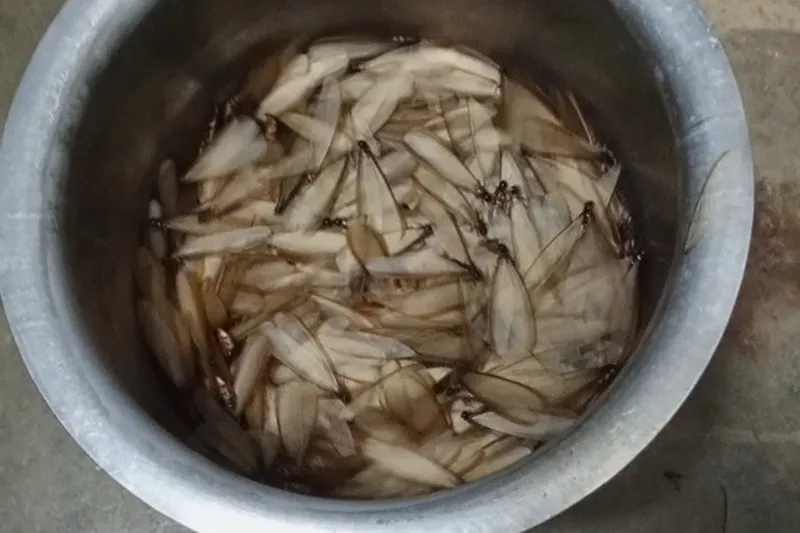
Winged termites collected after swarming
Winged termites (alates) collected after a swarm. Photo: Oliversamson1, CC0.
Winged termite compared with a flying ant Winged termite (alate) Flying ant 4 wings of roughly equal length Broad waist, straighter antennae Pinched waist Bent antennae
Simplified drawing. Many alates shed their wings soon after landing, so you may only find wings.

Flying termites are a reason to investigate, not proof of structural damage. Correct identification and a proper inspection matter.

How termite colonies operate and enter buildings

A colony includes workers, soldiers and winged reproductives (alates) that leave established colonies, often after warm rain, to pair up and potentially start new colonies.

Subterranean termites travel through soil and concealed voids, and may access houses through concealed ground-level pathways, timber and mud tubes. They can feed inside timber long before obvious damage appears.

Changes to landscaping, drainage, slab-edge access, building work or treated soil may undermine a termite management system. Our inspections include accessible external perimeters, visible slab edges and garden areas for this reason.

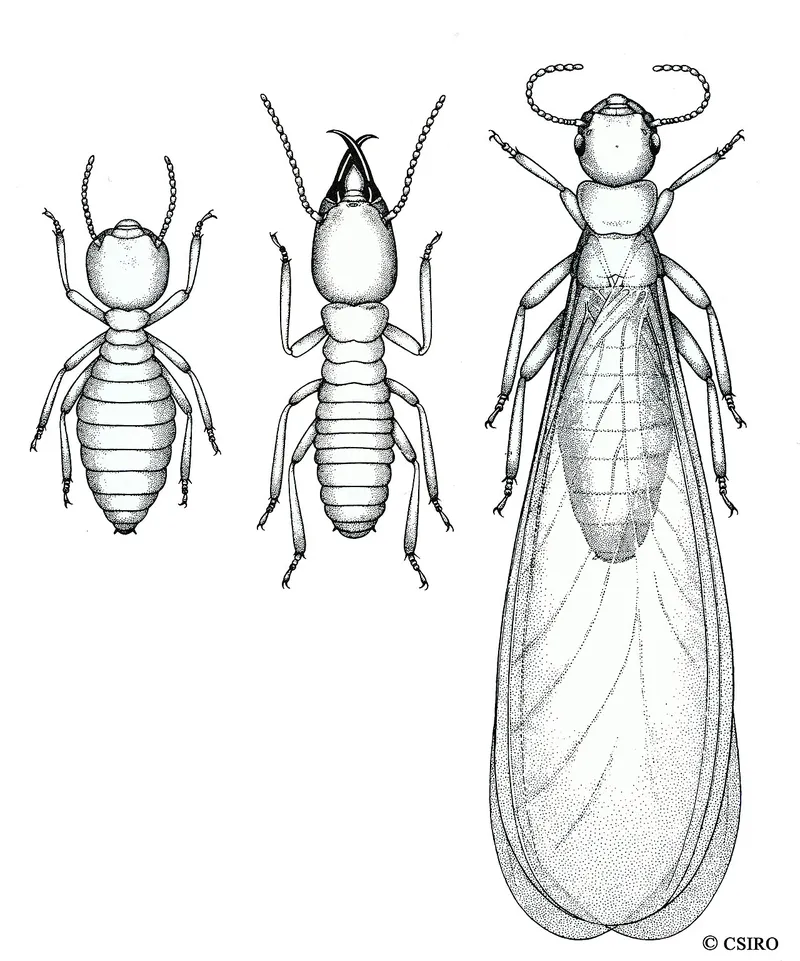
Drawing of a termite worker, soldier and winged reproductive
Coptotermes acinaciformis worker, soldier and winged reproductive. Photo: B.Rankin, CSIRO, CC BY 3.0.

Termite damage and common warning signs

Damage can hide behind a sound-looking surface

Termites feed on cellulose in timber and other plant-based materials. They can consume timber from within while leaving its outer surface looking relatively sound. Severe damage may weaken structural components and need costly repairs.

Parts of the home that may be affected

  • Walls: studs, bottom plates, lintels and timber bracing.
  • Floors: floorboards, joists, bearers and supporting timbers.
  • Roofs: accessible roof framing, trusses and other timber elements.
  • Internal fittings: skirting boards, door jambs, cabinetry and window frames.
  • Outdoor timber: decks, stairs, pergolas, fence components and retaining structures.

Signs worth investigating

  • Mud shelter tubes or earthen material along walls, piers or concealed access points.
  • Hollow-sounding, crumbling or blistered timber; unexpected paint or surface distortion.
  • Sticking doors or windows, sagging floors, soft skirting and unexplained timber deterioration.
  • Discarded wings indoors, or live termites in timber or soil near the building.

These indicators can have several causes, so they need professional assessment. Structural damage should be reviewed by a qualified building professional where necessary. An inspection cannot detect every concealed defect.

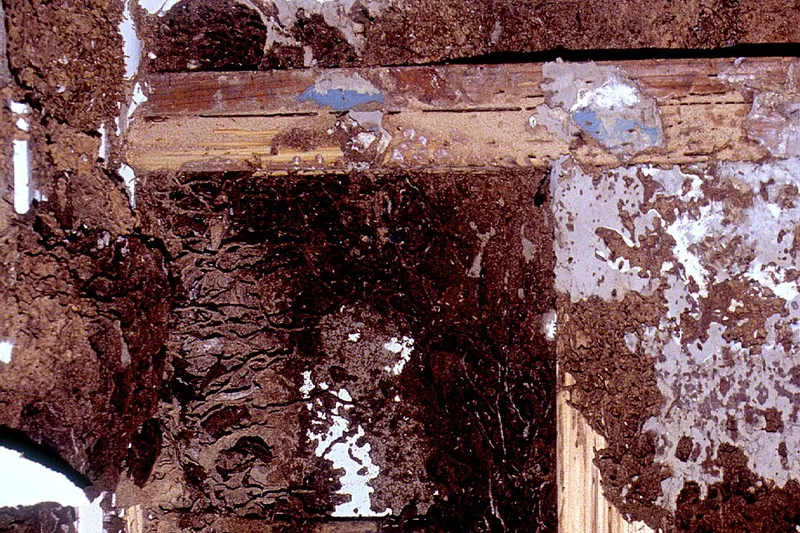
Termite damage to the timber of a house
Termite damage to a house. Photo: Entomology, CSIRO, CC BY 3.0.
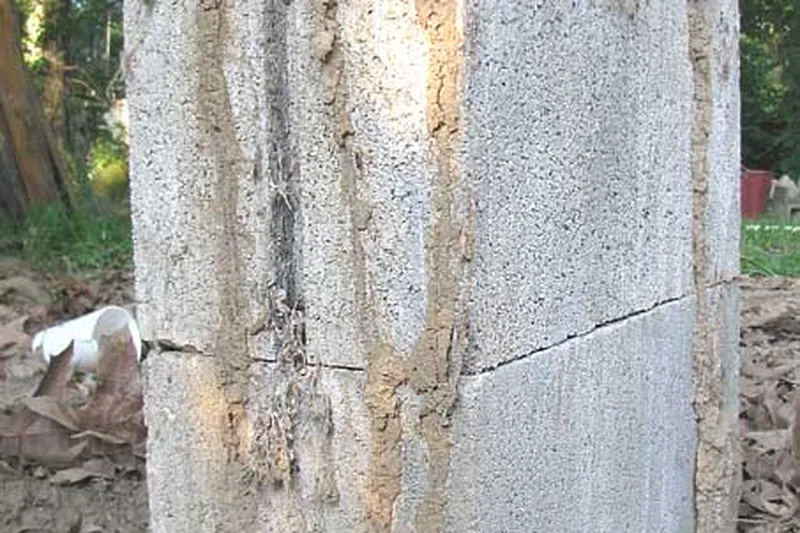
Mud shelter tubes on building foundations
Mud shelter tubes climbing the foundations of a building. Photo: Jim Conrad, Public domain.
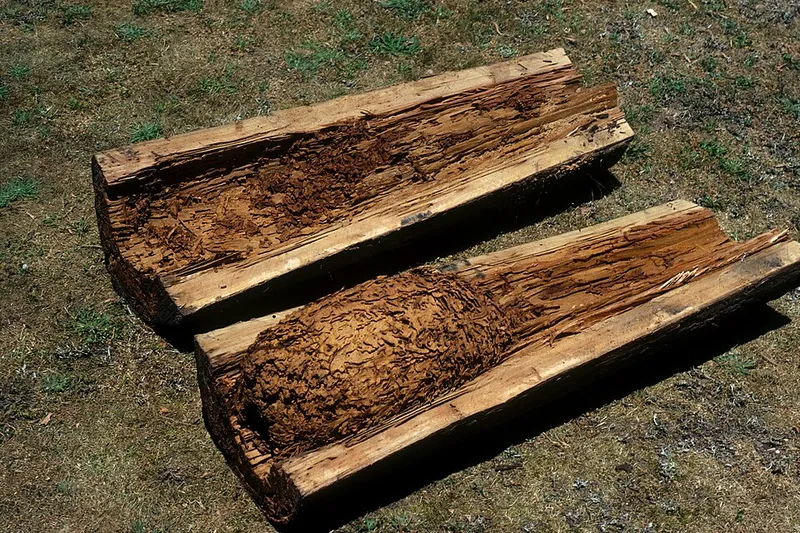
A timber pole hollowed out by termites
Coptotermes acinaciformis nest inside a timber pole, hollowed from within. Photo: Forestry and Forest Products, CSIRO, CC BY 3.0.

Book a termite inspection 0488 287 987

Annual inspections and ongoing termite management

Why regular inspections matter

Termites can feed inside timber long before obvious damage appears, and no termite management system gives a permanent guarantee that termites cannot enter a building.

Your termite warranty may need regular inspections

Many termite management system warranties require inspections at set intervals, maintenance and prompt action on problems. If those conditions are not met, warranty benefits may be reduced, disputed or lost, depending on the agreement.

Most home insurance excludes termite damage

Most standard Australian home insurance policies exclude termite damage, so repairs to frames, floors, roof timbers and joinery can fall to the owner. Missing an inspection does not automatically cancel your home insurance: check your policy's PDS.

QBCC: inspect at least every 12 months

The QBCC recommends termite inspections at least every 12 months, or more often in higher-risk circumstances.

No termite management system gives a permanent guarantee that termites cannot enter a building.

Is your home due for pest control or a termite inspection?

Tell us about your property and we confirm the scope and final price before your booking is completed.

CallBookQuote